

How AI Consumed 83% of Weekly Startup Venture Capital
 AI
Where is late-stage venture capital actually flowing?
For founders outside the direct path of artificial intelligence and machine-learning infrastructure, the answer is increasingly sobering. Capital is not merely consolidating into software; it is funneling into a narrow band of capital-intensive platforms, specialized robotics, and advanced training operations.
According to weekly tracking data from Fundraisebase, global startup financing saw 68 rounds totaling $6.2 billion raised between November 9 and November 15. Crucially, artificial intelligence accounted for 83% of all capital recorded during that seven-day window.
This guide breaks down how mega-rounds across AI training, physical robotics, and compute-focused financial platforms are reshaping late-stage entrepreneurship—and what it means for founders navigating an unprecedented capital concentration.
What Is Driving the AI Capital Monopoly?
The primary catalyst behind November's funding concentration is the escalating capital requirement of foundation-level intelligence and infrastructure. Unlike prior software cycles defined by asset-light distribution, current category leaders require massive balance sheets to acquire hardware, secure data pipelines, and scale physical production.
During the November 9–15 window alone, investors committed billions of dollars across a tiny cluster of private platforms:
- Mercor: The AI-training platform secured $750 million in a Series D round at a $20 billion valuation. The deal brought together traditional venture firms Benchmark and Felicis alongside specialized vehicles Fundomo, semiconductor titan Nvidia, and funds affiliated with Apollo.
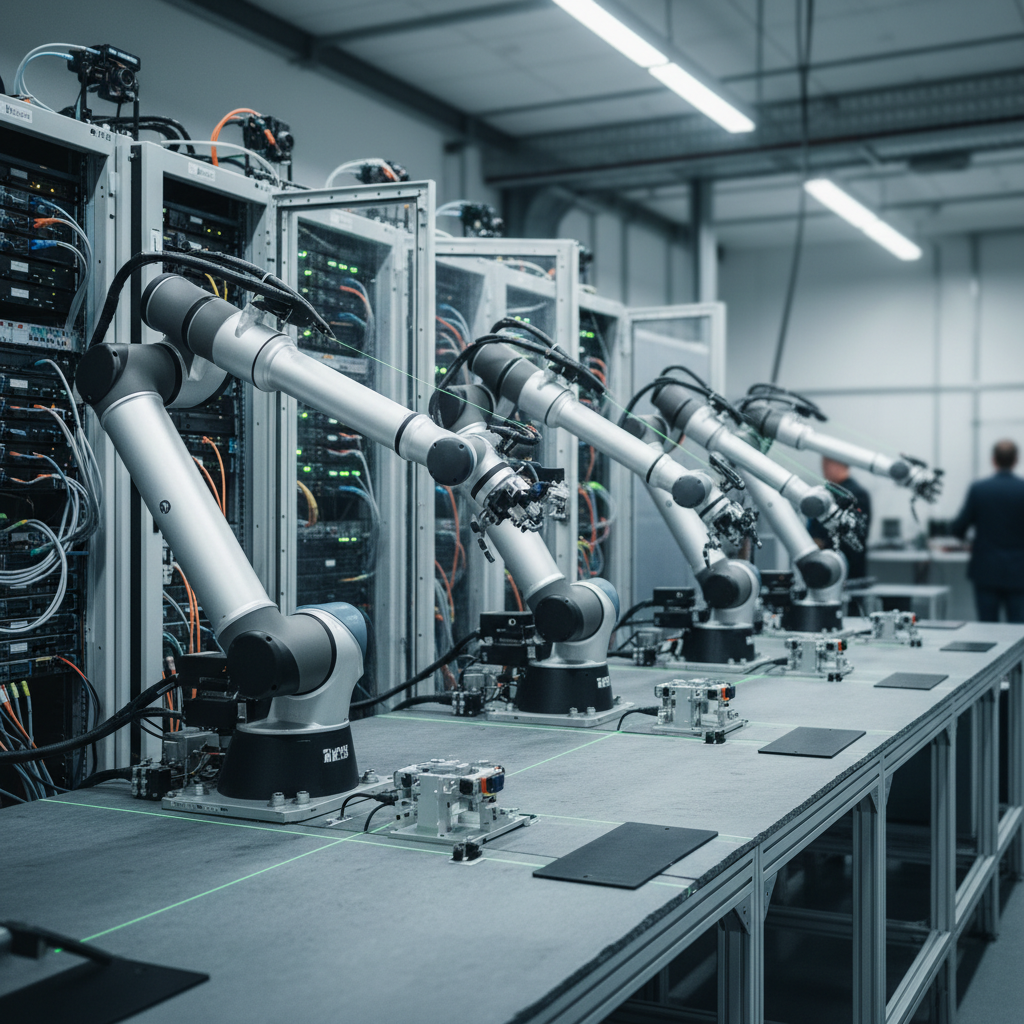
- Agile Robots: The German robotics group raised $500 million at an $8.5 billion valuation in a financing led by SoftBank, with participation from Nvidia, Hitachi, and T.Capital. The capital is designated for expanding manufacturing of its AI-powered machines, pushing total funding to about $2 billion.
- Kalshi: Broadening beyond its core event contracts, the platform is exploring fresh funding at a $65 billion valuation to support a marketplace for trading compute futures. That follows a prior $1 billion round co-led by Sequoia and Wellington, which itself came five months after raising $1 billion at a $22 billion valuation.
These transactions demonstrate that deep-pocketed allocators are bypassing mid-tier growth software to fund platform tollbooths, automated factories, and underlying compute exposure.
How Does Mercor Illustrate Training Consolidation?
Mercor’s $20 billion valuation highlights how investor appetite has migrated up the data and human-feedback stack. Building advanced frontier models requires continuous, specialized training workflows, turning training providers into indispensable infrastructure.
By drawing capital from a syndicate spanning venture stalwarts like Benchmark, corporate strategists like Nvidia, and credit-adjacent giants like Apollo-affiliated funds, Mercor demonstrates the hybrid capital structures required at the $20 billion tier. Pure-play venture firms can no longer easily underwrite these capital demands alone, necessitating institutional and debt-oriented co-investors.
For entrepreneurs, the lesson is clear: if your startup operates in the data pipeline or foundational model layer, institutional capital is willing to stomach staggering step-ups in valuation to secure access.
Why Are Industrial Robotics Reaching Mega-Cap Status?
Agile Robots' $500 million round underscores that software-only AI bets are increasingly spilling over into physical execution. Investors are hunting for tangible platforms that can bridge machine intelligence with real-world output.
Securing backing from SoftBank, Nvidia, Hitachi, and T.Capital gives the German company an integrated network of semiconductor suppliers, industrial conglomerates, and patient growth equity. Reaching an $8.5 billion valuation and $2 billion in aggregate funding reflects the extreme capital intensity required to manufacture complex machines at scale.
For European and global founders, Agile Robots illustrates an emerging blueprint: physical automation startups that combine localized industrial engineering with cutting-edge AI architecture can unlock sovereign and strategic capital pools that pure SaaS platforms cannot access.
What Is Compute Infrastructure Trading?
Perhaps the most telling shift in late-stage capital is Kalshi’s reported move to develop a compute futures exchange at a prospective $65 billion valuation. As processing power becomes the defining commodity of the modern economy, market participants require financial instruments to hedge, speculate on, and price data-center capacity.
By exploring a platform dedicated to compute futures, Kalshi is transforming the AI supply bottleneck into a financialized asset class. The talks reflect an astronomical escalation from its previous $22 billion valuation and subsequent $1 billion round co-led by Sequoia and Wellington.
When the infrastructure supporting computing power commands private valuations on par with legacy financial exchanges, venture capital is no longer funding consumer apps—it is capitalizing the market architecture of an industrial compute complex.
Where Does Non-AI Entrepreneurship Stand?
While AI captured 83% of the $6.2 billion recorded in mid-November, pockets of capital continue to support established, non-AI business models, though under much stricter terms.
In education technology, India-linked Eruditus reported a $113 million funding round led by Leeds Illuminate and Prosus Ventures. The deal also drew backing from the Chan Zuckerberg Initiative and Mark Zuckerberg and Priscilla Chan's philanthropic organization, showing that institutional backing persists for mature international education platforms.
However, geographic breadth remains uneven. DataPile tracking reported cumulative totals including $7.3 billion for India, $8.3 billion for China, $6.2 billion for Germany, and $9.9 billion for France, though unverified across short-term horizons. Meanwhile, regional trackers noted an absence of confirmed AI rounds above $2 million across Latin America and Africa during segments of the same period.
What Are the Key Takeaways for Founders?
Navigating this funding climate requires entrepreneurs to adjust their fundraising strategies to match allocator reality:
- Expect Severe Concentration: If your venture is not directly accelerating AI compute, training infrastructure, or physical robotics, growth rounds will remain disciplined, smaller, and heavily scrutinized.
- Court Strategic Balance Sheets: The participation of Nvidia, Hitachi, and Apollo across recent rounds shows that corporate strategic capital and hybrid asset managers are essential partners for rounds exceeding $500 million.
- Position Around the Supply Bottleneck: The rapid valuation surges at Mercor, Agile Robots, and Kalshi prove that investors are willing to fund the picks, shovels, training loops, and financial hedging tools underpinning the AI economy.
Sources
- AI training startup Mercor valued at $20 billion in latest funding round
- Startup funding, 9 to 15 November 2026: 68 rounds, $6.2B
- Y Combinator vs Techstars — GrantSnap
- Kalshi in talks to raise funds at $65 billion valuation for compute futures platform, source says
- Techstars vs Y Combinator (2026) Compared
- Funding News — $1153.6B across 3,459 rounds

Comments
Loading comments…