

Lime IPO Prices at $25 in Key Test for Tech Stocks
 AI
It began as a disruptive blur on city sidewalks, a symbol of Silicon Valley’s audacious, often messy, ambition. Now, after years of dotting urban landscapes and surviving a brutal industry shakeout, Lime has finally rolled onto Wall Street. The electric scooter and bike-sharing company priced its initial public offering at $25 per share, according to a Financial Times report, a landmark moment for the firm and a crucial test for a hesitant market.
The deal, steered by a trio of bulge-bracket banks—Goldman Sachs, JPMorgan, and Jefferies—ushers in a new, more scrutinized era for a company that has become a ubiquitous feature of modern city life. For its early venture capital backers, the listing offers a long-awaited path to liquidity. For the broader market, it provides a fresh data point on investor appetite for high-growth, consumer-facing tech companies still navigating the path to profitability.
The Blitzscaling Boom and Bust
Just a few years ago, electric scooters were the darlings of the venture capital world, the embodiment of a strategy known as “blitzscaling.” The thesis was simple: solve the “last-mile” transportation problem by flooding cities with app-enabled vehicles. Billions of dollars poured into a crowded field of startups, all racing to achieve market dominance by moving faster and spending more than their rivals.
Fleets of scooters appeared almost overnight from San Francisco to Paris, dropped onto corners with little warning or municipal coordination. It was a classic Silicon Valley playbook—launch first, ask for permission later—fueled by a belief that achieving scale would grant an insurmountable competitive advantage and that profitability would eventually follow.
The Civic Reckoning
But the disruption, celebrated in pitch decks, created friction on the ground. Residents and city officials grew frustrated by cluttered sidewalks that impeded pedestrians, particularly the elderly and people with disabilities. Safety concerns mounted amid a rise in scooter-related injuries, while the “gig economy” model for charging and maintaining the fleets drew criticism.
The initial welcome soured into a civic reckoning. Municipal governments, caught off guard by the initial invasion, fought back with regulation. The era of permissionless growth gave way to a complex and costly regime of competitive permits, fleet size caps, operating fees, and strict data-sharing requirements. For the scooter companies, the public right-of-way was no longer a free asset but a negotiated privilege.
A Global Survivor’s Playbook
The combination of high operational costs, vandalism, and a new regulatory gauntlet triggered a painful consolidation. The sky-high valuations of the boom years collapsed, leading to down-rounds, distressed sales, and bankruptcies. The COVID-19 pandemic, which emptied city centers, acted as a final, brutal filter, wiping out weaker players.
Lime emerged as one of the few global survivors. It did so by acquiring rivals, professionalizing its operations, and relentlessly focusing on the punishing details of “unit economics”—the essential calculation of whether a single scooter can earn more money over its lifespan than it costs to build, deploy, and maintain. It invested in more durable, proprietary hardware with features like swappable batteries to reduce logistics costs.
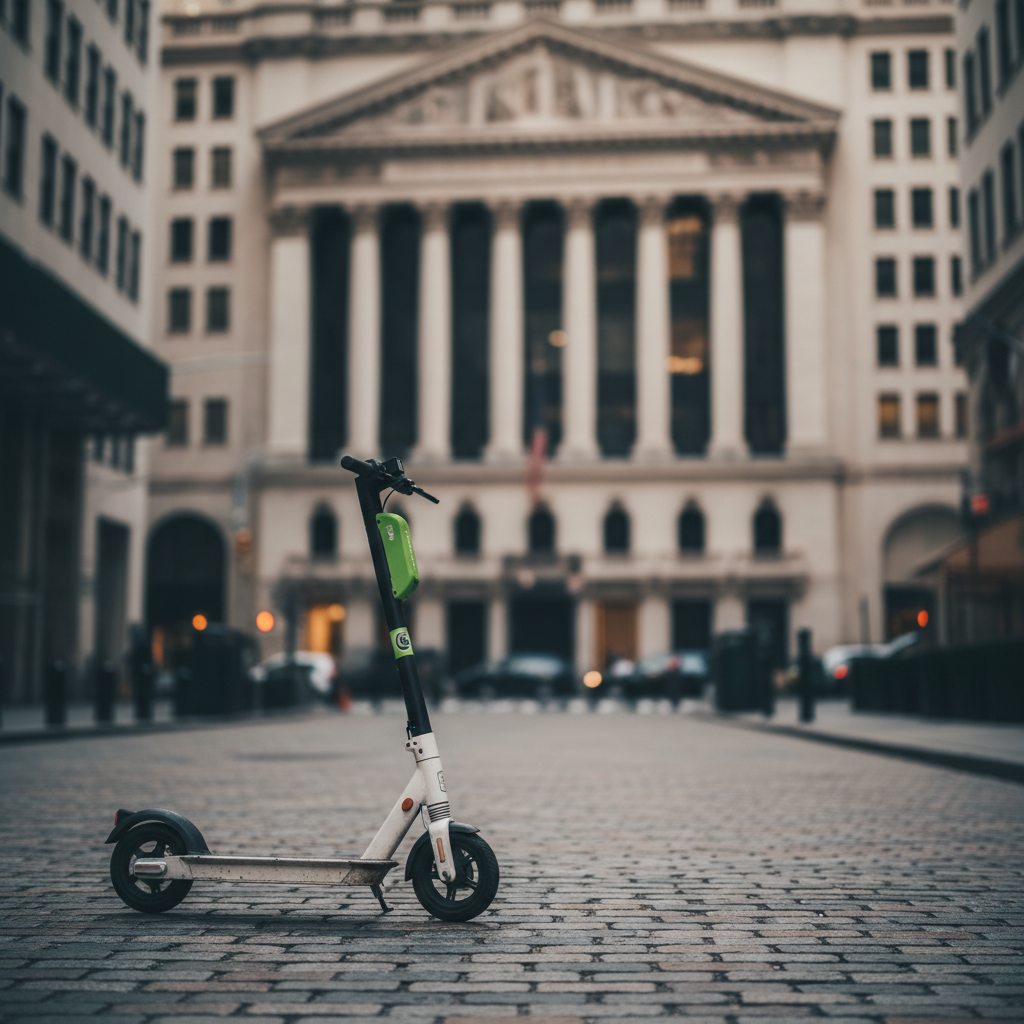
The company’s distinctive green-and-white vehicles remain a presence in many cities, but the global landscape is far from uniform. In Europe, the regulatory environment is a complex patchwork; while Germany’s DAX index has seen gains, for instance, the rules for new mobility ventures can vary dramatically from one city to the next. The operational challenges in a market like India, with its vast population and existing two-wheeler culture, are different still.
A Bellwether in a Wary Market
The success of Lime’s offering will be watched closely by a host of other late-stage, private technology companies. The IPO market has been tentative, with macroeconomic uncertainty and geopolitical tensions making investors wary of speculative growth stories.
This week’s market signals underscore the crosscurrents investors are navigating. A rising Dow Jones Industrial Average suggested confidence in the broader economy, while a slip in the tech-heavy Nasdaq pointed to nervousness around growth-oriented stocks. The involvement of Goldman Sachs, JPMorgan, and Jefferies as lead underwriters lends significant institutional credibility to Lime’s offering, suggesting they see genuine demand despite the choppy waters.
A strong debut could encourage other late-stage private companies to dust off their own S-1 filings and test the public markets. A weak or volatile performance, however, could prompt them to remain on the sidelines, continuing to rely on private funding in a market that is showing increasing caution.
The Public Market Gauntlet
As a public company, Lime will face an unforgiving new reality. The growth-at-all-costs narrative that captivated venture capitalists must now be replaced by a clear and sustainable path to profitability, communicated regularly in the stark language of an earnings report.
Investors will be looking for proof that the business model is not just viable but scalable and profitable. Can Lime continue to win and retain competitive permits in the world’s most lucrative cities? Can it manage its complex, street-level logistics while keeping costs in check? And can it innovate its way past the core challenges of hardware durability, battery life, and rider safety?
For now, the pricing of its IPO marks a significant milestone, a testament to the company’s resilience. But for Lime, the race is far from over. In going public, it has just crossed a new starting line, with the unforgiving stopwatch of the public market now ticking.



Comments
Loading comments…